
Ask a plant manager what their biggest operational challenges are and you’ll hear about throughput, downtime, supply chain, or labor. Cleaning rarely makes the list.
That’s not because manufacturing facilities don’t have cleaning challenges. It’s because the cleaning problems in most plants are slow, invisible, and cumulative – the kind that don’t announce themselves until they’ve already caused damage.
Dust that builds up in overhead structures over eighteen months doesn’t cause a problem on any particular Tuesday. Neither does the grease accumulation around a machine base, the grime in the floor drains, or the particulate that’s quietly degrading the air quality on the production floor. None of those things are emergencies – until they are. Until someone slips. Until an OSHA inspector notices the housekeeping deficiencies. Until a customer tour has to be rescheduled because the facility isn’t in a condition you’d want anyone to see. Until the machine that was running fine develops a maintenance issue that traces back, at least in part, to accumulated grime that wasn’t being addressed.
The cleaning problem most manufacturing facilities have isn’t one problem. It’s a collection of problems that have been quietly compounding in the background while everyone’s attention was on the things that felt more urgent. Here’s what that looks like in practice – and what a professional cleaning program does to address it.
The Four Cleaning Problems Manufacturing Facilities Overlook
1. The Overhead Dust Accumulation Problem
Walk through most manufacturing facilities and look up. Really look up – at the rafters, the ductwork, the tops of the racking systems, the overhead lighting fixtures, the cable trays, the structural steel. What you’ll usually find is a significant accumulation of dust, debris, and airborne particulate that has been settling there undisturbed for months or years.
This matters for several reasons. First, accumulated dust on overhead structures is a fire risk in facilities that process combustible materials, including wood, paper, certain plastics, food products, and many chemical compounds. The NFPA and OSHA both publish standards on combustible dust management for exactly this reason, and overhead accumulation is one of the most commonly cited violations in facility inspections. Second, that dust doesn’t stay overhead. It falls. It falls onto production equipment, onto products in process, onto employees. It recirculates through HVAC systems and degrades air quality on the production floor. And it falls during vibration events – when heavy equipment runs, when a forklift passes nearby, when a door slams – in larger quantities than anyone notices in isolation.
High-reach dusting and overhead cleaning requires specialized equipment and training that standard janitorial services don’t provide. It’s one of the most neglected services in manufacturing facilities – and one of the highest-impact ones.
2. The Floor Drain and Drainage Problem
Manufacturing floors have drains, which exist to handle spills, washdown water, and process fluids. But they also accumulate the sediment, grime, oil, and debris that passes through them over time. In most facilities, floor drains are cleaned reactively: when there’s an obvious blockage or a backup. Preventive drain maintenance – regular cleaning of drains, catch basins, and floor trenches – is rarely part of a cleaning schedule.
The consequences of neglected drains are predictable: slow drainage that allows standing water to accumulate on the production floor, creating both a slip hazard and a surface contamination risk. Odor issues, particularly in food production or chemical processing environments, that can become serious quality and compliance concerns. And in facilities subject to environmental permitting, the buildup of petroleum-based residue in drainage systems can create regulatory exposure that goes far beyond a housekeeping citation.
3. The Machine Area and Equipment Exterior Problem
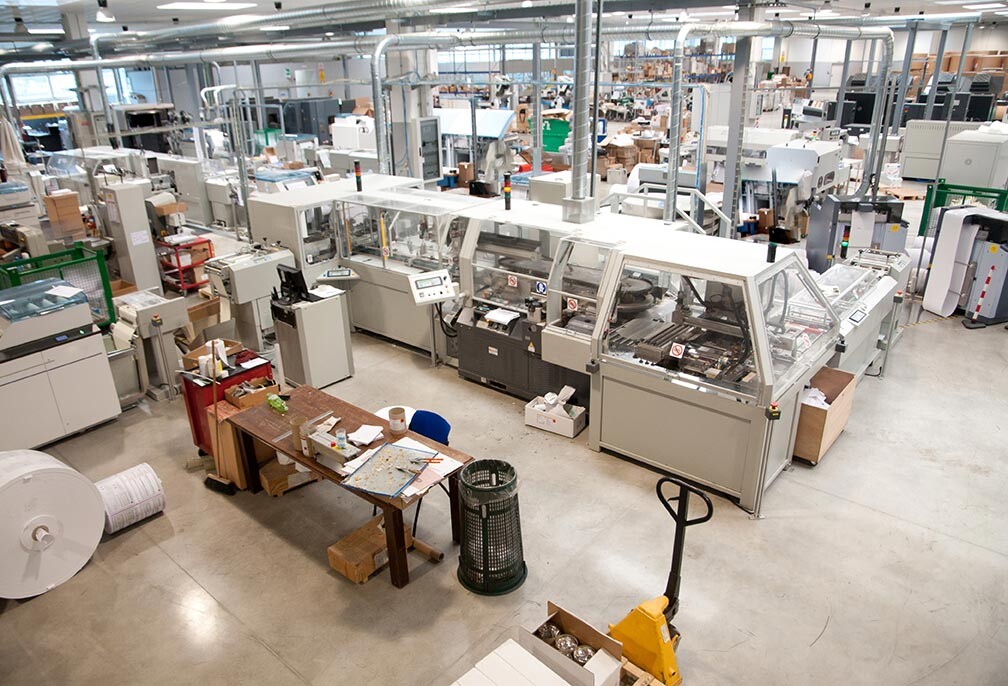
Every machine in a manufacturing facility has a footprint – and that footprint includes the floor around it, the surfaces of the machine itself, and the spaces underneath and behind it that are difficult to access during normal operations. In most facilities, these areas are cleaned superficially during regular floor cleaning but rarely addressed thoroughly.
Oil and lubricant that weeps from machine fittings accumulates on machine bases and the surrounding floor. Metal shavings and process debris settle in the gaps between equipment and the floor. Dust coats control panels, ventilation screens, and sensor housings. None of this causes immediate equipment failure – but it contributes to the conditions that make equipment failures more likely over time, and it creates slip and fire hazards on the production floor that a facility inspection will flag.
Cleaning around and behind production machinery requires coordination with your maintenance and operations team. Knowing when equipment can be safely accessed for cleaning, what surfaces can be wiped and what can’t, how to work around running lines. A professional cleaning company experienced in manufacturing environments understands how to do this safely and effectively.
4. The Employee Facility Problem
Restrooms, locker rooms, and break rooms in manufacturing facilities often receive a lower standard of care than customer-facing environments would. The logic, unstated but real, is that they’re employee areas – not spaces where customers or visitors will form impressions. But the condition of employee facilities shapes something arguably more important than customer perception: employee morale.
Employees who work in an environment where management maintains high standards – including in the break room and the locker room – feel more respected. They work better. They’re more likely to take ownership of their own workspace and less likely to contribute to the disorder. Conversely, employees who arrive at work to dirty restrooms and poorly maintained break rooms receive a clear message about how management values their comfort – and that message affects engagement in ways that are difficult to quantify but very real.
For food production and pharmaceutical manufacturing facilities, employee facility hygiene isn’t just a morale issue, it’s a regulatory one. The cleanliness of locker rooms and handwashing facilities is subject to direct scrutiny under FDA and USDA regulations, and deficiencies in these areas can result in serious compliance findings.
What Industrial Cleaning Actually Looks Like – and Why It’s Different
One of the most common misunderstandings about manufacturing facility cleaning is that it’s just janitorial service applied to a larger space. It isn’t. Industrial cleaning requires different equipment, different products, different safety protocols, and a fundamentally different approach to the job.
Industrial Equipment for Industrial Environments
Cleaning a production floor properly requires ride-on or walk-behind floor scrubbers capable of handling the kinds of soils present in a manufacturing environment – oil, metal particulate, chemical residue, process waste. Standard mop-and-bucket cleaning doesn’t cut it on a large production floor with embedded grime. High-reach dusting systems are needed to safely address overhead accumulation without contaminating production areas below. Pressure washing equipment handles loading docks, exterior surfaces, and periodic deep cleaning of floor areas that routine maintenance doesn’t touch.
Chemical Knowledge for Complex Environments
The cleaning products used in a manufacturing facility have to be matched to the surfaces and soils present, and especially with the regulatory environment. A food production facility requires food-safe sanitizers and cleaners that won’t leave harmful residues. A facility with sensitive electronic components needs cleaners that are safe for use around that equipment. A facility with specific drainage and environmental permits needs degreasers that are compliant with those requirements. A professional cleaning company understands how to navigate these constraints and selects the right products for each surface and application.
Safety Protocol Integration
Cleaning in an active manufacturing environment is a safety exercise as much as a cleaning one. Cleaners need to understand the production floor layout, know which areas require lockout/tagout awareness, work around moving equipment and forklifts, and coordinate with production staff to access machine areas at the right times. A professional industrial cleaning team is trained to operate safely within these environments – not just to clean effectively, but to do so without creating new hazards.
The Connection Between Cleanliness and Compliance
For manufacturing facilities subject to regulatory oversight, cleanliness isn’t just an operational preference, it’s a compliance requirement. OSHA’s General Duty Clause requires employers to maintain workplaces free from recognized hazards, and housekeeping deficiencies are among the most commonly cited violations across manufacturing sectors. Specific OSHA standards – including those covering walking-working surfaces, combustible dust, and hazardous materials storage – have direct housekeeping components.
Beyond OSHA, facilities subject to ISO quality management audits, FDA or USDA oversight, customer facility audits, or third-party certification requirements will all encounter cleanliness as an evaluation criterion. A professionally maintained facility is always ready for an inspection. A facility that cleans reactively – scrambling before an audit rather than maintaining a consistent standard – is never quite prepared, and inspectors and auditors notice the difference between a clean facility and one that was recently cleaned.
Building a Cleaning Program that Keeps Pace with Production
The practical challenge in manufacturing is building a cleaning program that works around production, not against it. Cleaning can’t shut down lines. It can’t interfere with scheduled runs. It has to happen in the windows between shifts, around maintenance schedules, and during planned downtime.
A well-designed manufacturing cleaning program addresses this through a layered schedule:
Daily:
- Production floor sweeping and debris removal
- Restroom and locker room cleaning
- Break room maintenance
- Trash removal from all facility areas
- Spot cleaning of obvious spills and accumulation
Weekly:
- Full floor scrubbing with appropriate equipment
- Machine area cleaning during scheduled downtime
- Loading dock and receiving area cleaning
- Office and administrative area janitorial services
Monthly/Periodic:
- High-reach overhead dusting and structure cleaning
- Floor drain and catch basin maintenance
- Exterior pressure washing of loading areas and building perimeter
- Deep cleaning of break rooms, locker rooms, and employee facilities
- HVAC intake and ventilation cover cleaning
The right frequency for each service depends on your production processes, facility size, and regulatory requirements. A food processing plant has different daily cleaning requirements than a metal fabrication shop. A professional cleaning company will assess your specific environment and design commercial cleaning solutions calibrated to it, not a generic package applied uniformly across industries.
The Bottom Line
The cleaning problems in most manufacturing facilities aren’t dramatic. They’re slow and quiet and cumulative, and they tend to show up in ways that feel disconnected from their root cause: a slip-and-fall on a greasy floor that was getting worse every month, an OSHA citation for housekeeping deficiencies that had been building for two years, an employee survey where “facility conditions” scores are persistently low, a customer audit that surfaces concerns about the cleanliness of the production environment.
A professional industrial cleaning program doesn’t just address the obvious dirt. It addresses the system – the overhead accumulation, the drainage maintenance, the machine area upkeep, the employee facility standards. And it does it consistently, on schedule, with the right equipment and the right products for your specific environment.
That’s what separates facilities that stay ahead of their cleaning challenges from the ones that are constantly reacting to them.
Need a professional cleaning program for your facility in or around Boise? Business Cleaning Solutions provides comprehensive manufacturing cleaning services – production floors, overhead structures, loading docks, employee facilities, and more, all on your schedule. Contact us today for a free custom quote.