


A clean, well-maintained carpet says something important about your business: you care about health, safety, and first impressions. But carpets are deceptive — they hide years of accumulated soil, allergens, spills, and odors beneath the surface. Facility managers and business owners often wait until a stain is impossible to ignore or a client complains before they act. That delay costs money: premature carpet replacement, lower employee productivity, regulatory headaches, and damaged reputation.
If you’ve been searching for signs your commercial space needs professional carpet cleaning services, this post is for you. Below you’ll find seven clear, evidence-based indicators that it’s time to call trained technicians. We’ll explain what each sign means, why it matters for your business, and how professional cleaning methods (hot water extraction, truck-mounted systems, enzyme treatments, odor neutralizers, controlled drying with air movers, and EPA-approved sanitizers) solve the problem the right way.
Read on for a practical, facility-manager friendly guide that will help you protect your investment, your people, and your brand. If multiple signs apply in your space, treat that as a priority flag — the combined effects are often worse than each sign alone.
Sign 1 — Visual Deterioration: Stains, Discoloration, and Traffic Lanes
What you’re seeing
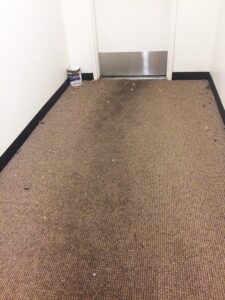
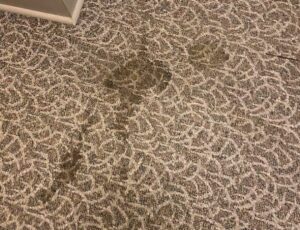
The most obvious sign is visual: permanent-looking stains, dark or shiny traffic lanes, and an overall dull or uneven color across the floor. High-traffic “lanes” develop where footfall compacts and soils carpet fibers; furniture footprints and grease stains can create patches that never return to original appearance with spot-cleaning alone.
Why it matters
Visual deterioration is not just about aesthetics. It signals long-term soil migration into the carpet backing and padding — the same contaminants that abrade fibers and chemically break them down. When fibers are damaged, carpets wear out faster and need earlier replacement, which is far more expensive than regular professional maintenance.
For client-facing businesses — lobbies, medical offices, law firms — a worn carpet undermines trust. For internal-facing operations — call centers, open-plan offices — it hurts morale and signals neglect.
What professional cleaning does
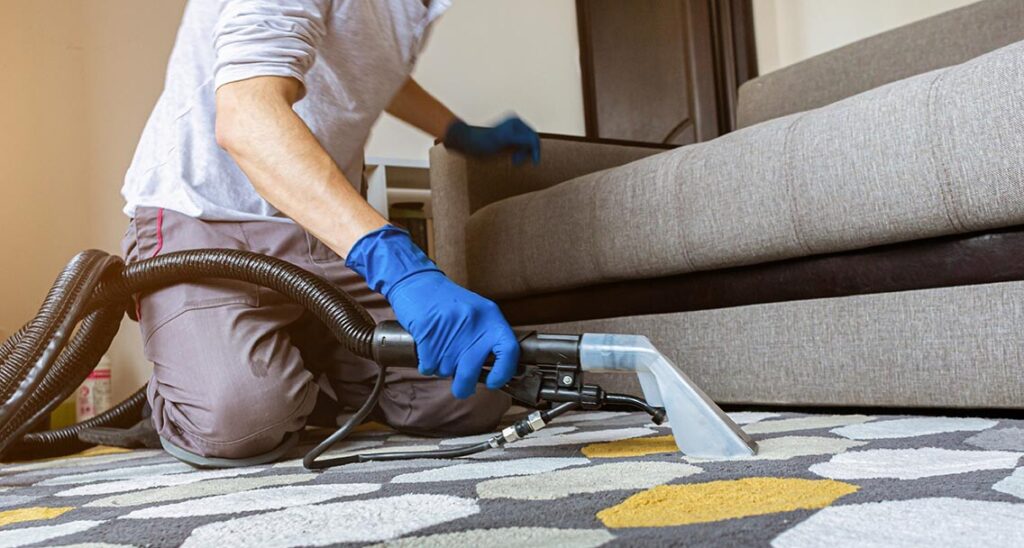
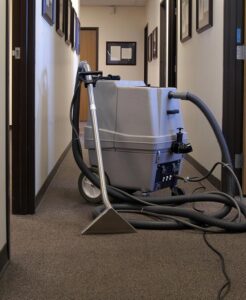
Professional deep cleaning uses hot water extraction (truck-mounted or high-capacity portable systems) to flush contaminants completely out of the fibers and remove grit, oils, and ground-in soils. Unlike rented machines, truck-mounted systems provide higher heat, stronger extraction, and better soil suspension, which translates to tangible visual restoration.
- Pre-sprays and agitation: Modern commercial cleaners apply alkaline or surfactant pre-sprays tailored to the stain profile and carpet fiber type, often combined with mechanical agitation (rotary or cylindrical brushes) to lift soils before extraction.
- Hot water extraction: High temperature and high-pressure injection break up soils; high-suction recovery removes them.
- Post-treatment: Fiber conditioners and protectants (like chair rail or Scotchgard-style protectants) restore texture and slow future soiling.
Recommended action
If you see persistent discoloration or dark traffic lanes, schedule a professional deep cleaning immediately and then set a recurring maintenance plan. For heavy-traffic commercial areas, a quarterly or semi-annual deep clean plus monthly touch-ups in the busiest zones is typical.
Sign 2 — Lingering Odors: The “Office Smell” Won’t Go Away
What you’re smelling
A musty, sour, or sour-urine smell that returns despite vacuuming and deodorizing sprays is a sign of deep-seated organic contamination. Odors often come from liquid spills (coffee, food debris, pet accidents), microbial growth in damp padding, or chemical reactions among residues.
Why it matters
Smell is a powerful perception driver. Persistent odors reduce customer confidence, lower employee satisfaction, and can be a compliance risk in food-service adjacent facilities. More importantly, odors often indicate biological activity (bacteria, mold), which can have health implications and accelerate material degradation.
Why DIY fixes fail
Sprays and wet-vac rentals temporarily mask or superficially remove odors. Heat from improper steam cleaning can “bake” proteins into fibers and padding — permanently setting smells. Poor water extraction leaves moisture behind, creating a breeding ground for microbes.
Professional odor removal methods
- Enzyme-based cleaners: Enzymes biologically break down organic compounds (urine proteins, food residues) that cause odors. Properly applied, enzymes digest odor at the molecular level rather than coating it.
- Hot water extraction with high-suction recovery: Removes both the odor-causing residues and the moisture that supports microbial growth.
- Sanitization and deodorization: EPA-registered sanitizers and odor neutralizers are used when needed to eliminate microbes and bind residual volatile compounds.
- Encapsulation and moisture control: In some situations, encapsulation systems lock remaining residues and make them removable by vacuuming; in others, full pad replacement or subfloor drying is recommended.
- Air movers and dehumidification: Controlled drying prevents re-growth of mold and bacteria.
Recommended action
When simple deodorizers fail, call professionals who use enzyme treatments and full extraction. Documented odor resolution is often part of a professional provider’s warranty or follow-up service.
Sign 3 — Employee Health Complaints: Allergies, Asthma, and Absenteeism
What you’re hearing
Complaints about itchy eyes, frequent sneezing, coughing, headaches, or increased sick days — particularly when these symptoms reduce after remote work or time away — suggest indoor air quality problems. Carpets are efficient collectors of airborne particulates: dust mites, pollen, pet dander, and mold spores.
Why it matters
Poor indoor air quality affects productivity and workplace wellbeing. According to multiple health bodies, allergen and particulate loads in commercial spaces are strongly linked to employee comfort and cognitive function. Frequent respiratory complaints may also trigger ADA or OSHA concerns depending on severity and accommodation needs.
How carpets contribute
Carpet fibers trap and hold allergens; HVAC systems circulate them; everyday activity re-suspends particulates into the breathing zone. Vacuuming with non-HEPA machines simply redistributes fines.
Professional mitigation strategies
- HEPA-filtered vacuums: Capture fine particulates that regular vacuums miss.
- Hot water extraction: Effective at removing embedded dust mites, dander, and pollen.
- Allergen-reduction protocols: Some commercial services offer specialized allergen treatments and follow-up sampling to verify reductions.
- Coordination with HVAC maintenance: Cleaning carpets should be part of an integrated IAQ program that includes filter upgrades and duct cleaning where necessary.
Recommended action
If employees report increased allergy symptoms, schedule a professional deep clean with HEPA vacuuming and hot water extraction, and coordinate with facility HVAC maintenance. Consider increasing cleaning frequency in seasons with higher pollen counts.
Sign 4 — Increased Difficulty in Vacuuming: Matted, Sticky, or Abrasive Fibers
What you’re feeling
Your janitorial staff reports that vacuums clog quickly, pick-up seems ineffective, or the carpet feels coarse and matted. The surface may attract soil more quickly after a cleaning.
Why it matters
This “resistance to vacuuming” is a sign of soil saturation: oils and grit have adhered to fibers and may have formed a tacky residue that traps new dirt. Continual abrasive particles shorten fiber life by mechanical wear. The longer this condition persists, the faster the overall carpet life declines.
How professionals attack the problem
- Soil suspension chemistry: Industrial pre-treatments emulsify oils and loosen grit before extraction.
- Mechanical agitation: Low-impact rotary or cylindrical brushing lifts compacted fibers so extraction is more effective.
- Multiple-pass extraction: High-performance extraction with multiple passes ensures maximum soil removal and reduced residue.
- Post-clean protection: Fiber protectants reduce re-soiling rate and make routine vacuuming more effective.
Cost-benefit perspective
Restoring a saturated carpet through professional cleaning is usually far less costly than full replacement. Frequent spot cleaning and aggressive vacuuming alone cannot reverse saturation; they often worsen compaction.
Recommended action
When vacuums stop performing, schedule an intensive cleaning that includes pre-spray, mechanical agitation, and high-suction extraction — then increase maintenance frequency and apply protectant coatings to prevent recurrence.
Sign 5 — You’ve Exceeded Manufacturer Warranty or Recommended Schedule
What you may not know
Most commercial carpet warranties require documented, professional cleaning at specified intervals (commonly every 12–18 months). Skipping these services voids warranty protection and can remove access to replacement or repair benefits.
Why it matters
Ignoring warranty terms is a hidden cost. Beyond the financial risk of voided warranty coverage, skipping prescribed cleanings typically accelerates wear and leads to earlier replacement. Manufacturers often design warranties around specific maintenance regimens — they expect professional care.
What to do
- Check manufacturer documentation for required cleaning frequency and acceptable methods.
- Maintain service records: invoices and cleaning reports prove compliance and maintain warranty validity.
- Choose a professional provider experienced with commercial warranty requirements; they can provide documentation and use recommended cleaning chemistry and methods.
Recommended action
If you are fuzzy on your carpet’s warranty schedule, have a pro inspect and document compliance. A well-documented maintenance history increases resale value and reduces lifecycle costs.
Sign 6 — The “Wicking” Effect After DIY Cleaning
What you’re seeing
You or staff cleaned a spot, and initially it looks better — but after drying the stain reappears or has a ring. That’s wicking: water pushes stain residues into the backing or padding and capillary action later draws them back up.
Why it happens
DIY spot treatments and household steam cleaners often lack sufficient extraction or use inappropriate chemistry. The wrong approach forces liquids and dissolved soils into layers beneath the fiber, where they can reappear—or worse, create odor or microbial growth.
Professional solution
- Proper pre-testing and analysis: Pros identify fiber type and stain chemistry to select the right treatment.
- Deep extraction: Truck-mounted extraction prevents residual soak-in by removing the cleaning solution and displaced soils.
- Pad and subfloor inspection: If the pad is saturated or the subfloor contaminated, replacement or subfloor remediation may be required.
- Enzyme or encapsulation therapies: To resolve protein-based stains (urine, food), enzymes digest at the source; encapsulants can lock and remove certain residues properly.
Recommended action
If wicking is occurring, stop DIY treatments and call a professional. Continued DIY attempts can make remediation more expensive or require pad replacement.
Sign 7 — An Upcoming Audit, Inspection, or High-Value Client Visit
Why this is critical
First impressions are immediate and lasting. Regulatory inspections, tenant walkthroughs, accreditation visits, or a major client tour place your space under scrutiny. A worn, stained, or odorous carpet undermines perceived competency more quickly than many operational faults.
Business stakes
- Healthcare and dental offices face strict cleanliness expectations from patients and regulators.
- Banking, legal, and corporate clients judge professionalism based on environment.
- Property managers rely on clean common areas to retain tenants and command premium rent.
How professionals help
A pre-visit professional deep clean restores visual appeal, removes odors, and creates a sanitized environment that demonstrates operational rigor. For audits, professional cleaning documentation (reports, before/after photos, chemical SDS sheets) provides evidence of due diligence.
Recommended action
Schedule a professional clean in advance of any major visit or inspection. For recurring audits, consider an ongoing maintenance contract to ensure consistently presentable spaces.
Why Professional Services? The Difference Between Good and Great
Equipment & Chemistry: Not All Cleaning Is Created Equal
Consumer machines and off-the-shelf chemicals are designed for household carpet — not commercial applications with heavier soil loads, complex stains, and larger areas. Professionals use:
- Truck-mounted hot water extraction: higher temperatures and stronger recovery.
- High-performance pre-sprays and detergents: formulated for commercial soils and fiber protection.
- Enzymatic treatments: for organic soils and odor neutralization.
- HEPA vacuums and filtration: to reduce airborne particulates.
- Air movers, axial fans, and dehumidifiers: to control drying and prevent microbial regrowth.
- Proven protectants and encapsulants: to slow re-soiling and simplify maintenance.
Expertise: Right Method for the Right Facility
Different industries need different approaches. A medical office has different regulatory and contamination concerns than a warehouse or senior-living facility. Professional technicians are trained to:
- assess fiber and soiling,
- select compatible chemistry,
- choose safe sanitation methods for sensitive environments,
- document work for compliance purposes.
Systems & Accountability
Top providers offer quality control systems: inspection reports, photo logs, re-clean warranties, and clear communication channels. This reliability reduces management time and risk.
Cost & Lifecycle Economics
Professional cleaning is an investment. Regular maintenance reduces lifetime carpeting costs by preserving fiber integrity and keeping adhesives and backing intact. Many facility managers find cleaning contracts cost far less than early replacement.
How Often Should You Schedule Professional Cleaning?
There’s no one-size-fits-all answer — frequency depends on use and risk. Here are general guidelines:
- High-traffic areas (lobbies, reception, corridors): Quarterly (every 3 months)
- Moderate-traffic offices: Semi-annual (every 6 months)
- Low-traffic private offices: Annual
- Special situations (daycares, medical, veterinary): Every 3 months or per regulatory guidance
- Pet-friendly offices or areas with food service: Monthly to quarterly touch-ups plus quarterly deep clean
Your cleaning provider should tailor frequency based on real-world observations and documented soil loads.
What to Expect from a Professional Carpet Cleaning Visit
A professional service should include:
- Pre-inspection & assessment — Determine fiber type, traffic patterns, and stain sources.
- Pre-treatment — Apply targeted chemistry to break up soils and stains.
- Mechanical agitation — Lift compacted fibers where needed.
- Hot water extraction — High-temperature, high-suction cleaning to remove soils.
- Sanitization & odor neutralization — Enzymes or approved sanitizers when indicated.
- Post-inspection & documentation — Before/after photos and a job report for your records.
- Recommendations — Follow-up frequency, spot management tips, and protection options.
Choosing a provider that documents work helps preserve warranty validity and demonstrates due diligence for audits.
FAQs — Optimized for Featured Snippets
Q: What are the top signs your commercial space needs professional carpet cleaning services?
A: Key signs include visible stains and traffic lanes, persistent odors, employee allergy complaints, carpet that resists vacuuming, exceeding manufacturer cleaning schedules, “wicking” after DIY attempts, and upcoming inspections or client visits.
Q: How often should commercial carpets be professionally cleaned?
A: Frequency depends on use: high-traffic areas quarterly, moderate traffic semi-annually, low traffic annually. High-risk sites (medical, daycare, pet-friendly) often need quarterly or monthly maintenance.
Q: What method removes deep-set dirt and allergens from commercial carpets?
A: Hot water extraction (truck-mounted) is the most effective method for removing embedded soils, dust mites, pet dander, and allergens. It combines heat, agitation, and powerful extraction to remove contaminants rather than masking them.
Q: Can DIY steam cleaning damage commercial carpets?
A: Yes. Household steam cleaners can leave excessive moisture, lack extraction power, and heat-set protein-based stains (urine), which causes “wicking” and permanent odor. Professional equipment avoids those risks.
Q: Do professional cleaning products remove odors permanently?
A: Professional enzyme-based cleaners and proper extraction remove odor sources at the molecular level. When combined with sanitization and controlled drying, these treatments eliminate odor rather than masking it.
Q: Will professional cleaning void my carpet warranty?
A: No — proper professional cleaning per manufacturer guidelines actually preserves your warranty. Failure to follow recommended cleaning intervals or methods can void coverage. Always keep service records.
Q: How long does professional commercial carpet cleaning take to dry?
A: With truck-mounted extraction and proper drying equipment (air movers and dehumidifiers), most commercial carpets can dry within 4–8 hours. Drying time varies with humidity, pile height, and airflow.
Final Thoughts — Protect Your Facilities, Your People, and Your Brand
Carpets are both an investment and a frontline component of your workplace environment. The signs listed above — from visual wear to employee health complaints — are not merely cosmetic issues; they represent operational risk, financial exposure, and reputational vulnerability. Ignoring them costs more than predictable cleaning contracts: it costs trust, compliance, and long-term asset value.
Business Cleaning Solutions provides tailored commercial carpet maintenance that includes truck-mounted hot water extraction, enzyme and odor neutralization, HEPA vacuuming, documented inspections, and ongoing maintenance plans designed to meet warranty and regulatory requirements. Regular, professional service is the practical, cost-effective way to keep your commercial spaces looking and performing their best.
Don’t wait until the signs become a problem. If you recognize any of these issues in your facility, it’s time to assess your needs and act proactively.
Contact Business Cleaning Solutions Today for a Custom Assessment and Quote — our team will evaluate your carpet condition, recommend a cleaning schedule, and provide documentation to protect your warranty and support your compliance efforts.
We proudly serve businesses across the region — including clients in Boise and Salt Lake City — with reliable, professional carpet cleaning services tailored to commercial environments.