
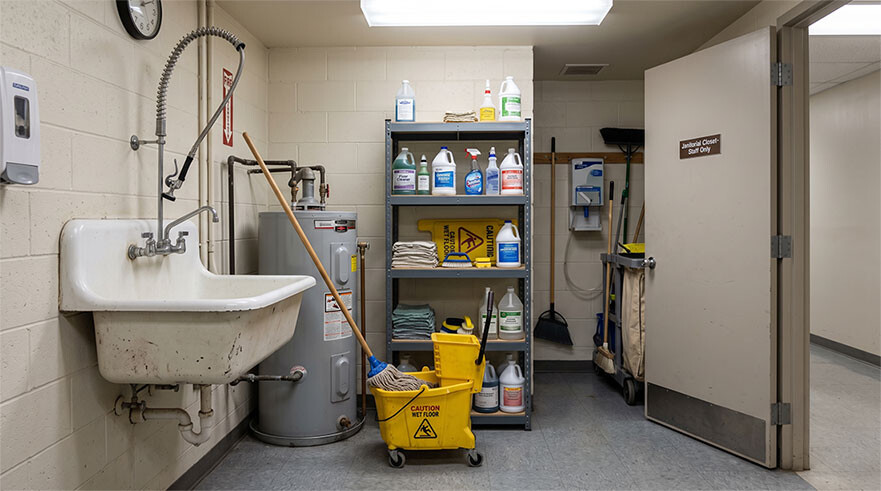
Let’s be honest for a second. Your janitorial closet is probably the most-ignored room in the whole building — right up until someone can’t find the mop, or a delivery box is parked squarely in front of the breaker panel. Then suddenly everybody cares.
Here’s the thing you already know deep down: that little closet isn’t really yours. It’s a shared hub. Your cleaning crew uses it. So does the maintenance guy. So does the plumber who shows up at 7 a.m. when a pipe decides to misbehave. When you start thinking about the space that way — as a room three or four different people rely on — organizing it stops feeling like a chore and starts feeling like doing everyone (including future-you) a giant favor.
So let’s get it sorted. Casually, no clipboard required.
The One Rule You Really Can’t Break
If you remember nothing else, remember this: keep your hands off the building’s guts.
Electrical panels, water heaters, breaker boxes — these have to stay completely accessible, all the time. That’s not us being fussy; building codes actually require clear, unobstructed access to them. So no leaning the mops against the water heater. No stacking ladders in front of the panel “just for a minute.” And definitely no tucking your cleaning chemicals or flammable stuff next to anything that gives off heat or high voltage.
Think of a little invisible force field around that equipment. Nothing goes in it. Ever.
Keeping It Safe (Because OSHA Is Watching)
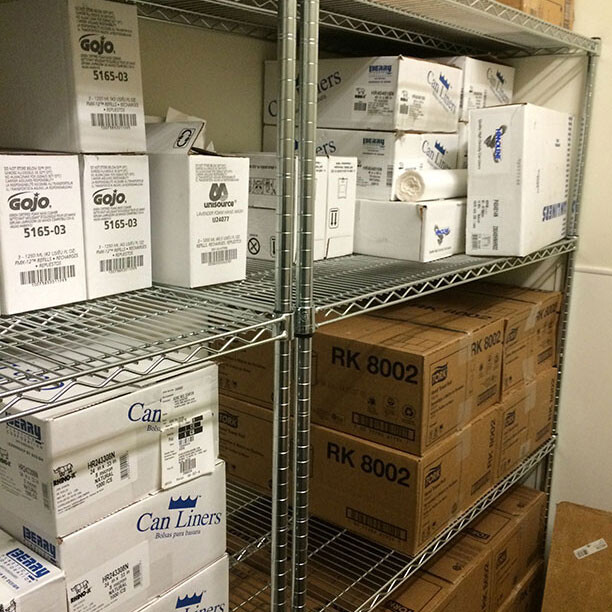
Nobody wants to think about the worst-case scenario, but a cluttered closet is genuinely how people get hurt — or how a small fire becomes a big one. A couple of easy habits keep you on the right side of OSHA and fire codes without much effort:
- Keep your walkways clear. Aisles and anything near an exit route need to stay open so people can move fast in an emergency and nobody’s tripping over a bucket in the dark.
- Store chemicals like you mean it. Flammable products should be clearly labeled and, when they need it, kept in a proper OSHA/NFPA-compliant safety cabinet — well away from electrical panels and heat sources. Future-you will thank you.
That’s really it. Two habits, big payoff.
Actually Organizing the Thing
Okay, now the fun part — making the space work for you instead of against you. The goal here is simple: get stuff off the floor and make it obvious where everything lives, so any vendor can walk in and instantly know what’s what.
Go vertical. Wall-mounted hooks, a pegboard, and a few mop and broom holders will free up your floor almost instantly, which is the difference between “supply closet” and “junk drawer you can walk into.”
Then label your zones. Give the building’s own equipment its own spot, and give the vendor gear a separate one. A quick storage safety checklist makes it painless to keep those lines drawn.
And take chemicals seriously. Make sure your spray bottles are GHS-compliant and properly labeled, and keep your Safety Data Sheets somewhere everyone can grab them. If three different vendors are working in there, they all legally deserve to know what chemicals they’re standing next to.
Give It a Little Weekly Love
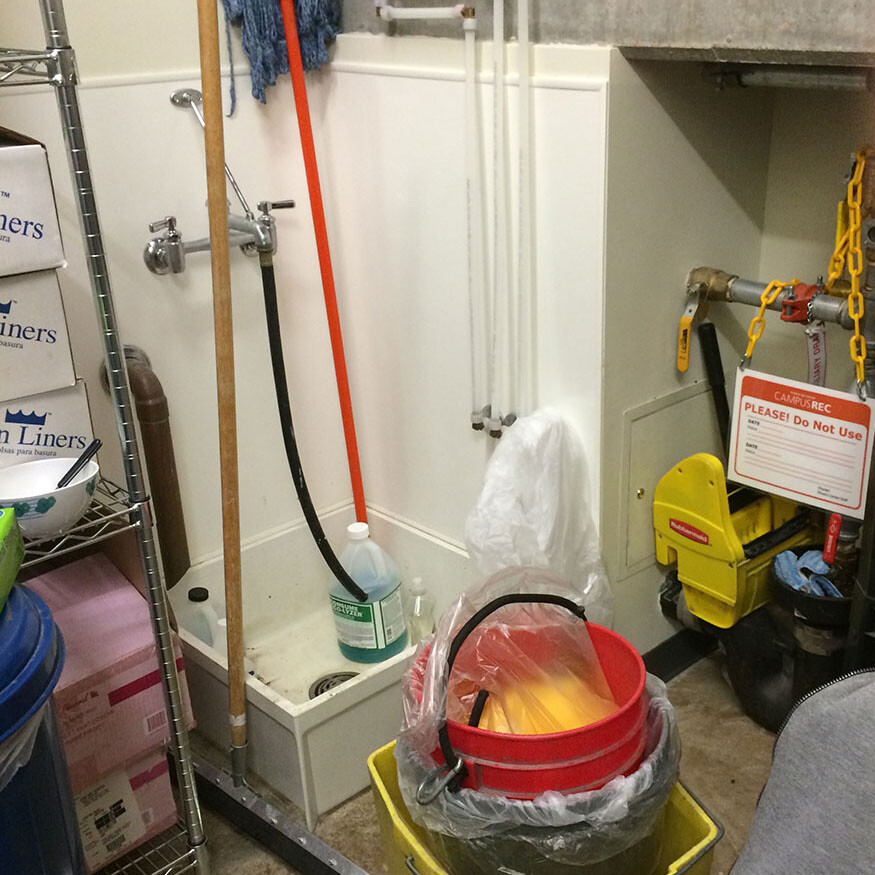
A tidy closet doesn’t stay tidy on its own — but keeping it that way takes about ten minutes a week. Pop in, wipe up any spills, toss the empty or expired bottles, and do a quick scan to make sure nobody’s quietly stacked a box in front of your electrical or plumbing access. That’s it. A quick lap, once a week, and you’ll never walk into a disaster.
Do that, and your closet turns into the one room in the building that just… works. And when your crew, your maintenance team, and that 7 a.m. plumber can all find what they need without a treasure hunt? That’s a win for everybody — you most of all.