
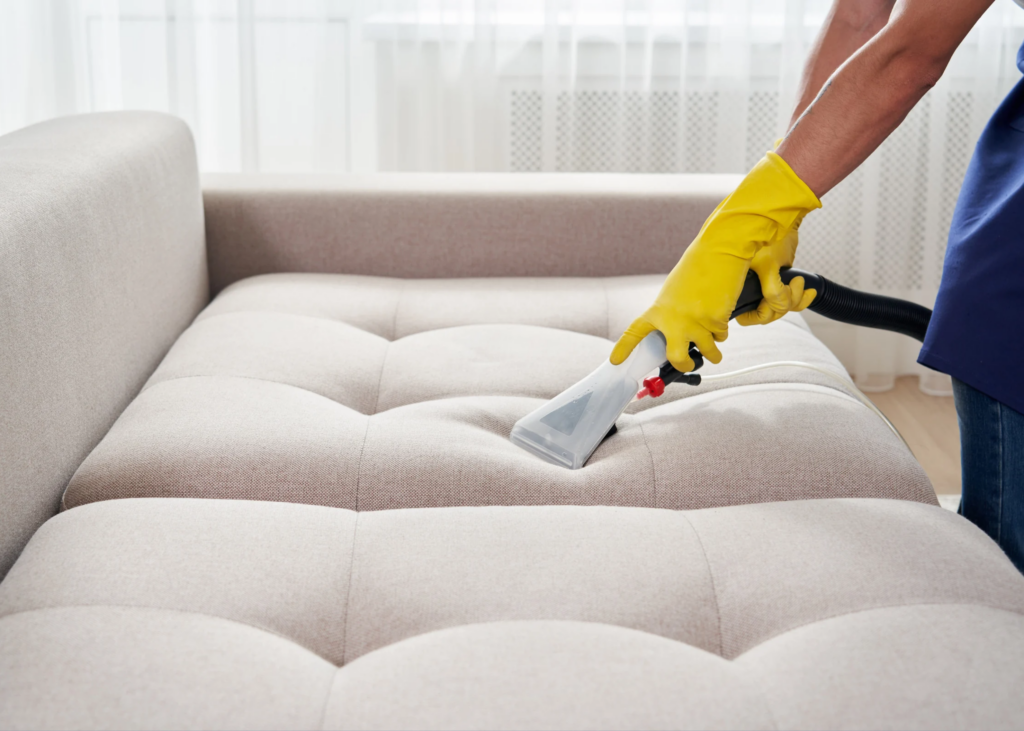
Take a look around your office. The chairs at each workstation, the reception sofa where clients wait, the cushioned seating in your conference room they may look perfectly clean. But fabric surfaces are remarkably good at collecting what floats through the air: dust, pollen, pet dander, and other fine particles that settle into fibers over time.
Upholstery is one of the most overlooked surfaces in a commercial cleaning routine. Floors get vacuumed, windows get wiped down, and trash gets emptied, but the furniture people sit on for hours every day often goes unaddressed until a stain appears or an odor becomes impossible to ignore.
Professional upholstery cleaning addresses what routine surface care cannot: the embedded soil, allergens, and organic residue that build up over time. This article explains how upholstery affects indoor air quality, the benefits of professional cleaning for commercial spaces, and what to expect from a maintenance plan that supports a cleaner workplace.
For businesses in Boise and the Treasure Valley, Business Cleaning Solutions, an ISSA member and Idaho’s Best winner, provides professional upholstery cleaning tailored to your commercial spaces’ specific demands.
How Upholstered Furniture Affects Indoor Air Quality
Fabric-covered furniture acts like a passive filter. Its fibers and padding trap particles that settle out of the air, which is helpful until the load builds up. Everyday activities like walking, cleaning, and vacuuming can kick settled dust back into circulation.
This doesn’t mean office furniture is a primary driver of poor air quality on its own. Many factors influence indoor air quality: ventilation, filtration, moisture levels, and overall cleaning practices. But upholstered furniture is a consistent source of accumulated particulates that’s easy to overlook because its effects aren’t visible on the surface.
Common Contaminants That Accumulate in Upholstery
The types of particles that collect in office upholstery vary by setting, but several are common across most commercial environments:
- Dust and fine particles from the air and from clothing
- Pollen tracked indoors, particularly during high-pollen seasons
- Pet dander in workplaces where animals are present
- Dust mites and their allergenic particles, which thrive in fabric materials
- Food crumbs, body oils, and organic residue from break rooms and shared seating
- Moisture-related concerns that can contribute to microbial growth in padding and fabric layers
Why Regular Vacuuming May Not Be Enough
Vacuuming is an essential part of any commercial cleaning routine. It removes loose surface debris and helps prevent buildup from escalating. However, vacuuming alone may not remove soil and particles that have worked deeper into fabric and padding over time.
Professional upholstery cleaning uses methods suited to the specific fabric type and level of contamination, providing a more thorough treatment than surface vacuuming can offer. For heavily used commercial seating, it’s typically the more effective option for addressing embedded soil. It also pairs well with commercial carpet cleaning as part of a complete soft-surface maintenance plan.
5 Ways Professional Upholstery Cleaning Supports Better Indoor Air Quality
Professional upholstery cleaning won’t fix every air quality problem on its own, but it removes one of the biggest reservoirs of settled dust in a typical workspace. Here’s how it helps.
1. Removes Accumulated Dust and Fine Particles
Everyone who walks through your door brings in a little outdoor soil, and each workday adds fibers, paper dust, and skin flakes to the mix. Much of it lands on soft surfaces and stays there. Over months, upholstery can hold a significant amount of this material.
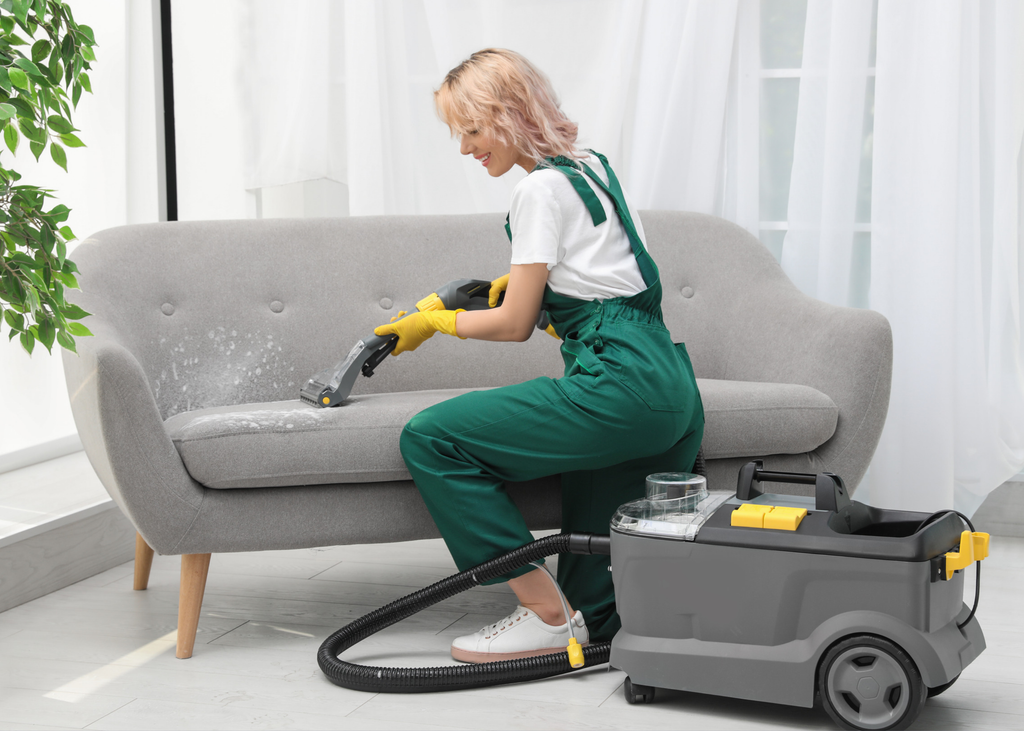
Deep cleaning uses methods suited to the fabric, such as hot water extraction to loosen and pull out accumulated dirt rather than just disturbing it. Paired with routine vacuuming and good filtration, it becomes part of a broader dust-control strategy for your building. High-dust cleaning services can address elevated surfaces at the same time for a more thorough result.
2. Helps Reduce Common Allergens
Pollen, pet dander, and dust-mite allergens readily collect in fabric-covered furniture. Removing that buildup reduces one potential allergen source in spaces where people sit for hours at a time.
To be clear, upholstery cleaning won’t cure allergies or prevent respiratory conditions. It removes allergen-laden debris from furniture, supporting a more comfortable environment for employees and visitors sensitive to those triggers.
3. Helps Control Unpleasant Odors
Spilled coffee, food residue, body oils, and other organic material can leave lingering odors in seating, especially in break rooms and high-use lounges. Air fresheners only mask the problem, and the EPA notes that some scented products can react with ozone indoors to form additional particles.
Professional cleaning targets the source by extracting the residue causing the smell. If an odor keeps returning after cleaning, it may point to an underlying issue such as moisture damage or a hidden spill in the padding that needs further attention.
4. Reduces Dirt Buildup in High-Use Areas
Reception areas, conference rooms, waiting rooms, and shared office spaces get heavy daily use. Repeated contact grinds soil deeper into fabric fibers, making furniture look dingy and wear out faster.
Scheduled deep cleaning complements daily and weekly maintenance by resetting heavily used seating before the buildup becomes visible. It works best alongside a consistent commercial janitorial routine that keeps the rest of the space in order.
5. Uses Cleaning Solutions That Don’t Add New Pollutants
Cleaning furniture shouldn’t trade one air quality problem for another. According to the EPA, many common cleaning, disinfecting, and degreasing products release volatile organic compounds (VOCs) both while in use and, to some degree, while stored. Because upholstery holds onto what you apply to it, harsh chemical residue left in fabric can keep affecting the air after the job is done.
That’s why Business Cleaning Solutions uses non-toxic, biodegradable cleaning products for upholstery. You get clean furniture without introducing new pollutants into the space your team breathes every day.
What Happens During Professional Upholstery Cleaning?
A professional cleaning visit typically follows a structured process:
Inspection. The technician examines each piece of furniture to identify the fabric type, any existing stains or damage, heavily soiled areas, and manufacturer care requirements. This step determines the appropriate cleaning method and sets realistic expectations.
Pre-cleaning. The technician removes loose debris from accessible surfaces, and heavily soiled areas may receive a pre-treatment before the main cleaning step.
Cleaning. Depending on the fabric and soil type, the technician selects the best method. Common approaches include hot water extraction, low-moisture cleaning, and dry-cleaning compounds. Using the wrong method for a given fabric can cause damage, which is why professional judgment matters.
Soil removal. The chosen method lifts loosened dirt, residue, and cleaning agents from the fabric. Hot water extraction draws out moisture and suspended soil, while dry cleaning removes compounds along with captured debris.
Drying. Proper drying is especially important in humid or poorly ventilated spaces. Upholstery that retains excess moisture can develop mildew problems, which is why adequate airflow and appropriate drying time are part of a quality service.
Final inspection. The technician reviews the results, notes any stains that couldn’t be fully removed, and flags areas of concern for follow-up.
How Often Should You Schedule Upholstery Cleaning?
The right frequency depends on how furniture is used and what conditions it’s exposed to. Factors that call for more frequent attention include:
- High occupancy or turnover. Reception areas, waiting rooms, and shared conference seating accumulate soil faster than a private office chair used by one person.
- Pets or animals on premises. Veterinary offices and pet-friendly workplaces should expect faster allergen buildup in fabric furniture.
- Food and beverage use. Break rooms and dining areas create conditions for spill residue and odor-causing buildup.
- Visible soil or persistent odors. These are the clearest signs that professional cleaning is overdue, but waiting for visible problems means the furniture has already carried a significant load.
- Industry or facility type. Medical offices, schools, and childcare facilities typically need more frequent maintenance because of their occupancy patterns.
As a starting point, many commercial facilities find annual or semi-annual professional cleaning appropriate for moderately used furniture, with higher-traffic pieces assessed more frequently.
5 Ways to Maintain Better Indoor Air Quality Between Cleanings
Vacuum upholstered furniture regularly. Use the appropriate attachment for fabric surfaces and work systematically, covering cushions, arms, backs, and seams. Follow any care instructions on the furniture’s label.
Address spills immediately. The longer a spill sits, the more deeply it penetrates fabric fibers and the more likely it is to set as a stain or become a source of odor. Blot (don’t rub) with a clean cloth, then follow the manufacturer’s recommendations for spot treatment.
Keep indoor spaces properly ventilated. Proper ventilation dilutes and removes airborne particles before they settle into surfaces. Maintain HVAC systems on schedule and replace filters as recommended.
Control moisture. Damp conditions encourage mold and mildew in fabric furniture. Dry any wet upholstery promptly and investigate any persistent musty smell or signs of water damage.
Include upholstery in your overall cleaning plan. Coordinate upholstery maintenance with carpet cleaning, floor care, and your janitorial schedule. A plan that treats all surfaces together works better than one that handles them in isolation.

When Should You Hire a Professional Upholstery Cleaning Service?
If your office furniture has persistent odors that regular cleaning doesn’t resolve, visible soil that vacuuming won’t address, stains that have resisted spot treatment, or simply hasn’t been deep-cleaned in a year or more, it’s time.
When evaluating a service, look for a provider that checks these boxes:
- Assesses before cleaning. At Business Cleaning Solutions, service consultants assess your business and create a customized cleaning plan before any work begins.
- Uses methods matched to your furniture. The right technique depends on fabric type and condition, and proper drying should be part of the service, not an afterthought.
- Chooses products with your air in mind. Look for a provider whose cleaning solutions remove buildup without leaving new pollutants behind.
- Stands behind the work. BCS backs its upholstery cleaning with a satisfaction guarantee.
- Works around your schedule. Cleaning should fit your business hours to minimize disruption.
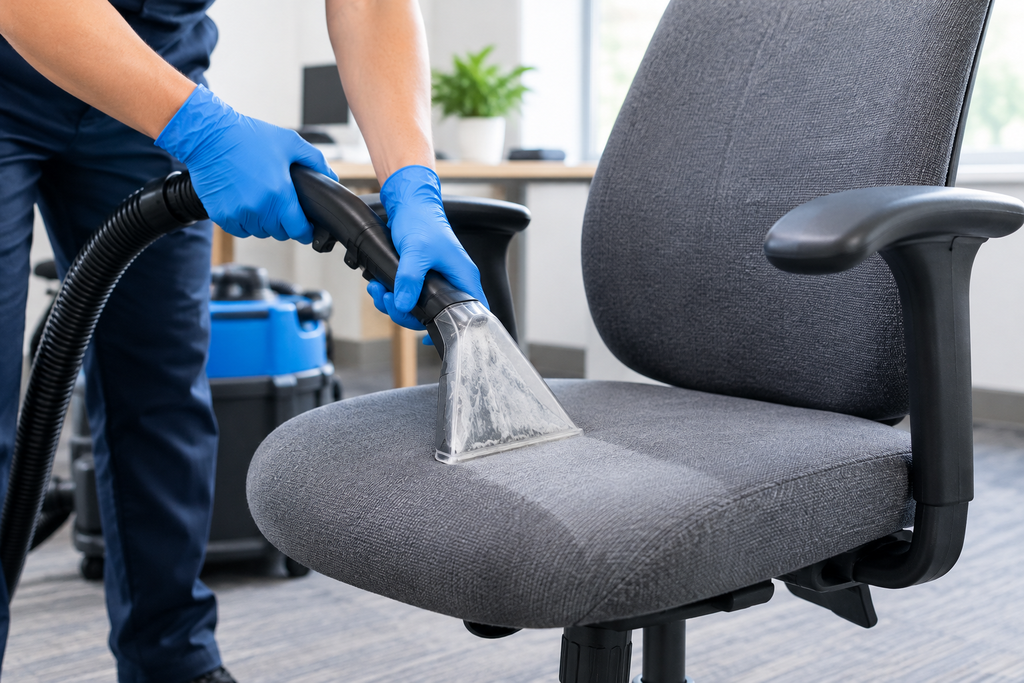
The results speak for themselves. One Google reviewer shared that a BCS technician cleaned two white office chairs and brought them back to life.
Contact Business Cleaning Solutions to discuss your facility’s upholstery needs and build a cleaning schedule that fits your Boise or Treasure Valley business. Explore Upholstery Cleaning Services.
Frequently Asked Questions
It can help. Removing accumulated dust and allergens from fabric-covered furniture reduces one source of particles that get stirred back into the air. Overall indoor air quality also depends on ventilation, filtration, and moisture control.
Yes. Upholstery can accumulate dust, pollen, pet dander, and dust-mite allergens. Regular vacuuming and periodic professional cleaning help manage that buildup.
BCS uses non-toxic, biodegradable products, and sensitive employees can step away while cleaning happens and until the furniture is dry.
They serve different purposes. Vacuuming handles routine surface maintenance, while professional cleaning removes deeply embedded soil and oils. Most businesses need both.
Drying time varies with the fabric, cleaning method, humidity, and airflow. Follow your technician’s instructions before returning furniture to use.
There’s no universal schedule. Frequency depends on how heavily furniture is used, its condition, and your facility’s needs. High-traffic, customer-facing areas usually need more frequent cleaning than low-use spaces.